The 2032 Brisbane Olympics has been reshaping parts of Brisbane property since the bid was announced in 2021. Five years in, it is fair to ask: is the Olympics bump already priced in, or is the real re-rating still ahead?
What the Olympics actually changes
Infrastructure. Public transport (the Cross River Rail, extensions of the Gold Coast light rail), stadium precincts (The Gabba redevelopment, Chandler sporting precinct), and surrounding urban renewal (Woolloongabba, Hamilton, Albion). These changes transform accessibility, and accessibility is the largest predictor of suburban price performance.
The 2000 Sydney Olympics provides the template. Suburbs within 10km of Sydney Olympic Park - Homebush, Lidcombe, Strathfield, Flemington - significantly outperformed the Sydney median for 8-10 years after 2000. The infrastructure built for the Games (rail upgrades, road upgrades, the M4, M5) kept delivering returns well past the event itself.
What has priced in
Woolloongabba, Dutton Park, and the South Bank corridor have seen 40-60% gains since 2021, against a Brisbane median gain of 35-45%. Albion and Hamilton (Athletes Village sites) have tracked 30-45% above the broader Brisbane median.
What has not
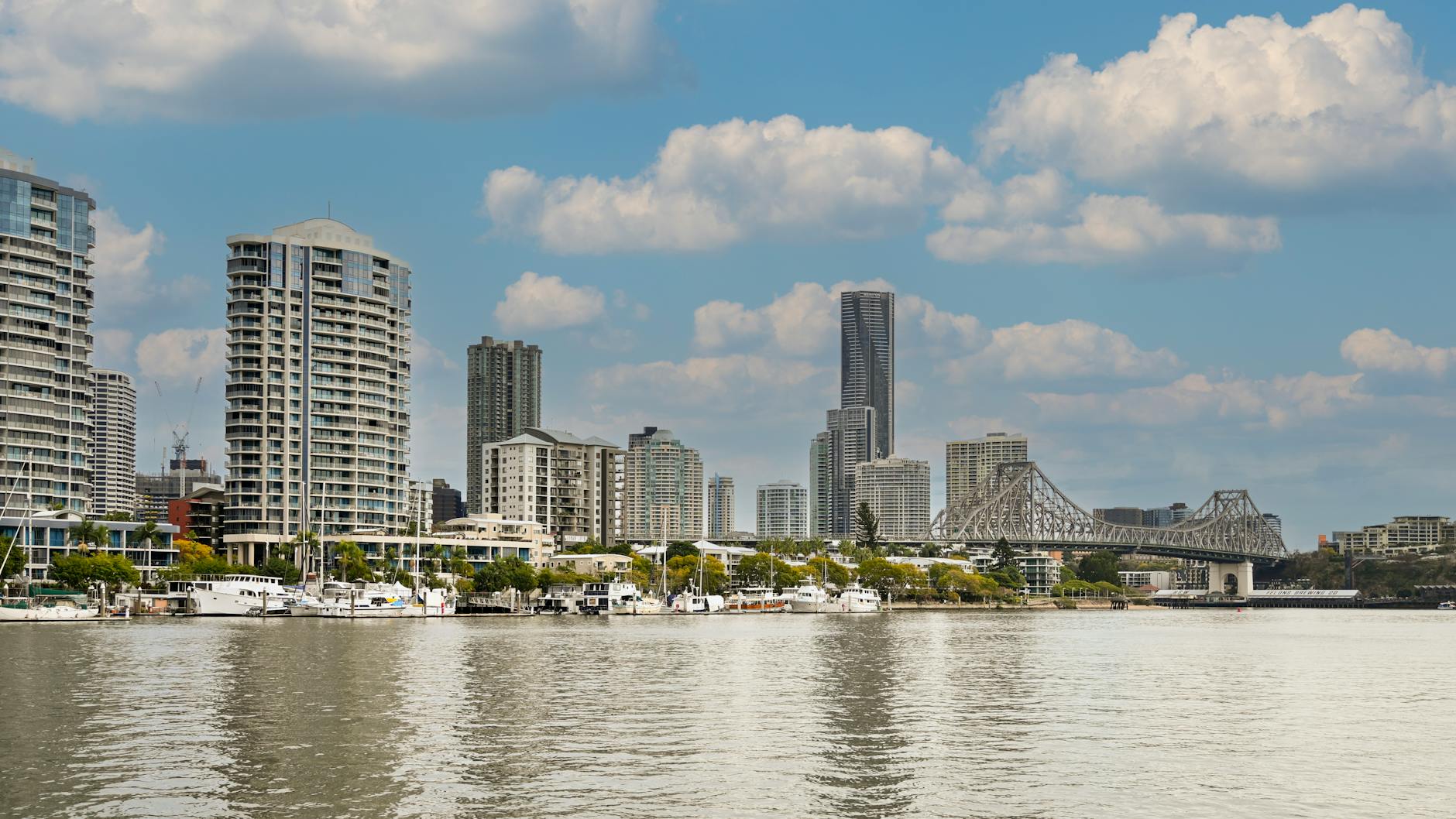
Outer ring suburbs connected to the Olympics via Cross River Rail (Boggo Road, Salisbury, Moorooka, Yeerongpilly) have performed roughly in line with the broader Brisbane market. These are the suburbs where the Olympics value is not yet reflected in pricing. In the Sydney comparison, equivalent suburbs re-rated 3-5 years out from 2000, then again 2-3 years after, as the full infrastructure benefits emerged.
The risk side
Construction delays and cost overruns: stadium construction budgets have overrun by 30-80% in recent major events (Tokyo 2020, Paris 2024, LA 2028 early estimates). Brisbane's experience so far is within normal range but not immune.
Political risk: state and federal changes in government can recontest specific infrastructure commitments. The Cross River Rail is funded and under construction; surrounding road upgrades and secondary infrastructure are less certain.
Post-event reversal: Sydney's Olympic Park precinct took a decade to fully occupy after 2000, and some commercial precincts never recovered the initial buoyancy. Olympics suburbs often see a 12-24 month price pause 1-2 years after the event while the broader market absorbs new supply.
The strategic read

Already-rated Olympics suburbs (South Bank, Woolloongabba, Hamilton) have captured the early bet. The remaining value is in second-ring suburbs with planned but not-yet-delivered infrastructure - the Salisbury, Moorooka, Yeerongpilly, Tarragindi, Rocklea, and Coopers Plains corridor along the Cross River Rail alignment. Returns from here depend on the infrastructure delivering on time and the Games running without major political disruption.
For long-term buyers (10+ year horizon), these suburbs look strategically priced. For 3-year flippers, the Olympics story is too late.
Want the numbers run for your situation?
Get a free, no-obligation assessment from Arrivau's licensed team — loan, property or migration.
Start a free assessment →